


Empowering from the Ground, Fostering Just and Sustainable Food Systems
For more than three years, Koalisi Pangan BAIK has been working through the Voices for Just Climate Action (VCA) programme in Manggarai, East Flores, and Lembata Regencies. Comprising members of KEHATI (The Indonesian Biodiversity) Foundation, KRKP (People's Coalition for Food Sovereignty), Ayo Indonesia Foundation, Ayu Tani Mandiri Foundation and YASPENSEL (Larantuka Socio-Economic Development Foundation), it strengthened and encouraged youths, women, farmers and rural communities to voice the impacts of climate change and local solutions, particularly in strengthening agroecological food systems. Working with local champions whose livelihoods depend on natural resources, they have implemented various initiatives to secure a more sustainable future.
November 6, 2025
A participatory study conducted by Koalisi Pangan BAIK (Good Food Coalition) in 10 villages across Manggarai, East Manggarai, East Flores, and Lembata regencies showed that 85% of farmers reported changing their planting schedules due to increasingly unpredictable weather. Clove and coffee farmers in Goloworok and Wewo villages in Manggarai, as well as in Colol Village in East Manggarai, experienced crop failure in recent years. The increasing number of pests and plant diseases, along with the emergence of new pests, caused farmers in Tal Village, Manggarai’s rice granary, to experience a decline in yields. Food crop farmers in East Flores and Lembata regencies experienced similar conditions. Their crop yields declined. The number of rainy days decreased, but rainfall intensity increased around January and February.
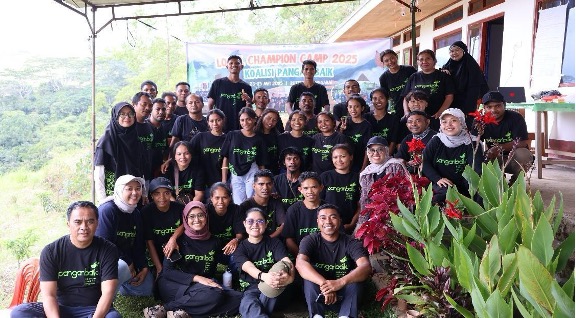
Koalisi Pangan BAIK worked with local champions, including farmers, fishermen, and food producers whose livelihoods depend on natural resources and therefore bear the heavier impacts of climate change. Since joining the VCA programme, they have implemented various activities and good practices, including voicing and implementing locally based solutions, particularly regarding the importance of maintaining local food diversity as an adaptation to climate change. This community-based climate action is an effort to secure a more sustainable life for today and future generations.
GROWING HOPE IN DRY LAND
In Kawalelo Village, East Flores Regency, a dry, rocky area, the Bamboo Andaka community began conserving the Watonitung water spring in 2022. They planted over 3,000 bamboo trees around the spring and maintain them, hoping to provide sufficient water for the village and eliminate the need to purchase it.

In the Tapobali and Hoelea II villages of Lembata Regency, youths from the GEBETAN and Rumpu Rampe Hoelea communities grow local foods such as sorghum and local barley (jali-jali). These crops require less water, are environmentally friendly and adaptable to drought. They also collaborate with local farmers to develop products, providing alternative food sources and promoting food diversity for their village’s sustainability.

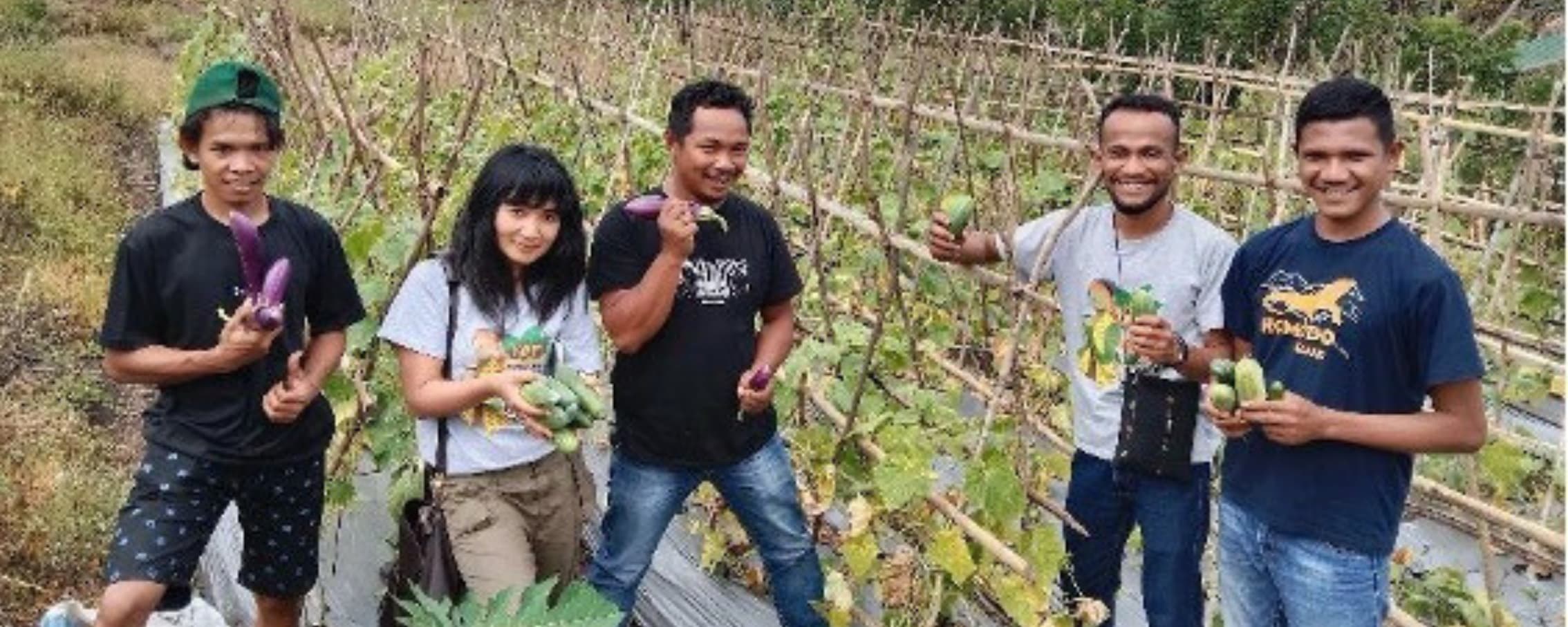
In the Tal and Rai villages of Manggarai Regency, the Momang Lino community adopted organic farming due to the impacts of climate change. They received training from the VCA programme, using agricultural and livestock waste to produce biochar and fertiliser. This allows them to grow various vegetables, fruits, and nuts, supporting food security and generating income from sales. The Tal Village Government recognised their efforts by providing financial support for an organic horticulture demonstration plot, and they now lead sustainable agricultural initiatives for Gerak Tedeng Farmers Group.
The Momang Lino community also develops local food-based entrepreneurship using traditional recipes, with women as primary creators, forming Gejur Cama Women’s Farmers Group. Their climate initiatives have been presented at festivals and forums with policymakers. As a result, the Manggarai Regency government established a Joint Secretariat and Working Group for Climate Resilient Development, a platform for civil society-government coordination on climate policies.

Moving to Hewa Village, East Flores Regency, Wetan Helero Community documents and replants local food crops that were neglected due to some policies that prioritise certain commodities. They have successfully documented and replanted 17 varieties of local rice, six varieties of local corn, sorghum, millet, and various legumes. They are also pioneering entrepreneurship that balances economic goals with environmental conservation. Today, the Wetan Helero movement empowers youth and women’s groups in Hewa Village. It also serves as a knowledge-sharing platform for those interested in local food, fostering intergenerational dialogue and knowledge transfer among local, domestic, and international communities. Intergenerational dialogue is growing, and knowledge transfer is flowing.

The replicable local solutions initiated by local champions in Flores and Lembata — combining technical training, capability strengthening, community-managed finance, and policy advocacy — are to be implemented in other locations. However, significant challenges remain. While highly replicable, scaling up requires careful adaptation, consistent financial support, and effective coordination among multiple stakeholders to overcome barriers.
Facing future challenges requires collaborative efforts with youths, women, and other vulnerable groups. The involvement of vulnerable groups is crucial to strengthening food security amidst the threat of climate change. These groups are often unrecognised, unheard, or even viewed as insignificant actors. Ensuring that no party or group is left behind or marginalised is essential to realising a just and sustainable food system.


