


Climate Gallery: Artivism for Climate Action
The Climate Gallery, as part of the #VoicesForThePlanet granting programme, brought together ten artistic and activist proposals at the city's cultural centre, Manzana de la Rivera, for an experience that fused dance, popular theatre, storytelling, documentary, muralism, sculpture, and virtual and augmented reality. It was a colourful and participatory evening. Art was created with and for the community to address issues such as air, water, habitat, memory, and coexistence.
December 2, 2025
INTERVENTION IN PUBLIC SPACES
The evening began with You Are Not Alone — VR 360° by Zet Studios, an immersive experience in the Chaco region that allowed the audience to “be there,” see from the perspective of the territory, and discuss sustainability and habitat loss. In the Ruiz Díaz de Guzmán Auditorium, Ivanna Aquino’s Cuerpos de Resistencia (Bodies of Resistance) transformed scars into danced energy: the intimate became collective and healing.

Next, Teatro Yara’s El macetero de Villa Yvytu (The Flowerpot of Villa Yvytu) addressed the right to breathe with humour and irony, reminding us that clean air should not be a privilege. In the courtyard, we continued with the short documentary Kambuchi: El brillo de la arcilla que resiste (Kambuchi: The Brilliance of the Clay That Resists) by Tobogán Media, a portrait of Vicenta Rodríguez and the artisans of Itá: clay as living memory and an enduring craft. Placita San Blas (Little Square of San Blas) by Derlis Báez + community (Bañado Santa Ana) showed how a restored wall can revitalise a plaza, using recycled materials and natural elements.

After the official welcome, we screened Voces por el Planeta (Voices for the Planet), an intimate and profoundly human journey to the heart of art and climate justice in Paraguay. The audiobook “El Tacuaral,” by Claudia Miranda, placed bamboo centre stage—both as setting and teacher—uniting forest, crafts, and play to learn about caring for the land.
“El río tiene memoria” (Rubén Gómez) presented the progress of a sculpture: a golden fish emerging as a symbol of dignity for the Paraguay River. “Abrazo a la Madre Tierra” (Aura Britez) invited families to incorporate small acts of care based on collective memory. With “Alas de Libertad” (Gabriel Melgarejo), two murals of macaws highlighted the fragility of urban habitats, enhanced by augmented reality.
The evening concluded with “Cuerpos de Agua” (Colectivo Incesante): a choreography evoking the Bañados wetlands: flow, adaptation, and resilience.
The Climate Gallery was much more than an exhibition: it was the result of a deeply participatory process where children, young people, and adults co-designed the content and uses of the spaces alongside the artists. This active collaboration not only strengthened the sense of belonging but also reinforced the shared commitment to caring for each artwork and its surroundings. The diversity of languages—narrative, dance, murals, theatre, virtual reality, and documentary—opened the dialogue on climate justice to different audiences, creating an accessible, dynamic, and participatory experience.
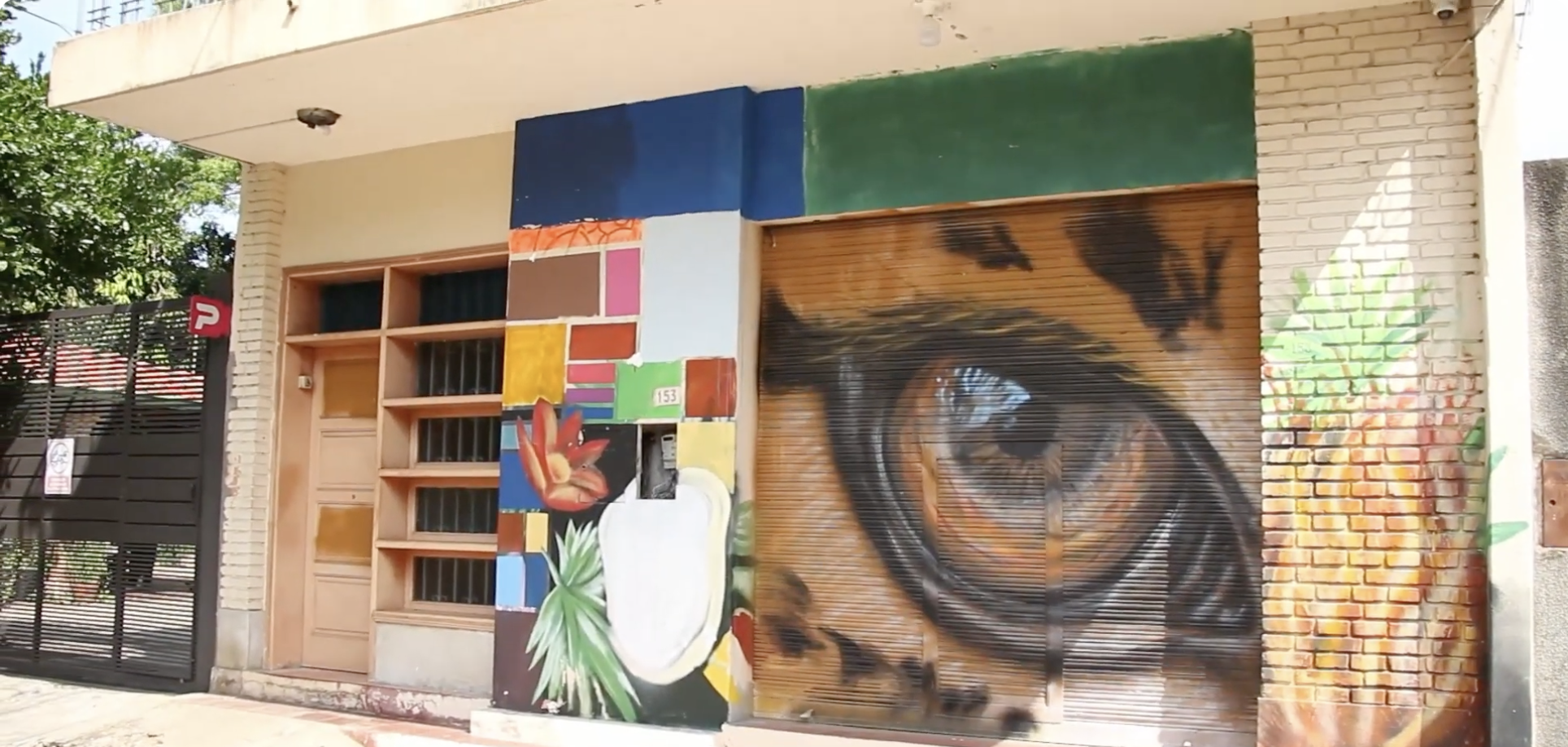
The materials also spoke: clay, bamboo, natural pigments, and community walls reminded us that sustainability is, above all, a cultural practice. The incorporation of technologies such as virtual and augmented reality did not deviate from the community’s focus; on the contrary, it broadened intergenerational dialogue by offering new ways to connect. Water, air, and traditional crafts were interwoven with the identity of each territory, embodying a simple and powerful idea: Voices for the Planet mobilises action, creates connections, generates constructive conversations, and strengthens local capacities.
The short documentary “Voices for the Planet” showcased the call for proposals, and the process of creating, mentoring and monitoring each proposal.


