


Climate Change Adaptation Planning for Resilience in Kisumu
In Kisumu, the fight against climate change is being shaped not in boardrooms, but in neighbourhoods by the people who live its reality every day. Through a community-driven planning process, residents joined hands with research institutions, government agencies, civil society, and development partners to chart a shared path toward resilience.
Published 11 November 2025
Maseno University contributed research insights, while the County Government of Kisumu, through its departments of Environment, Climate Change, Water and Natural Resources, and Land, Housing, and Urban Development, ensured that adaptation actions could be integrated into policy and practice. Civil society partners, including SUSWatch Kenya and the YWCA, offered technical and outreach support. At the heart of it all were community members, represented by the Federation of the Urban Poor and Muungano wa Wanavijiji, who kept the process participatory and grounded in local priorities.
Adaptation planning covered seven wards within Kisumu’s informal settlement belt: Nyalenda A, Nyalenda B, Kaloleni/Shaurimoyo, Kondele, Manyatta B, Railways, and Central Kisumu. Using the Tujuane Tujengane model, communities engaged at the household, cluster, unit, and ward levels, with Community Health Promoters and cluster heads mobilising participation. In total, 1,382 people took part, with women and youths strongly represented.
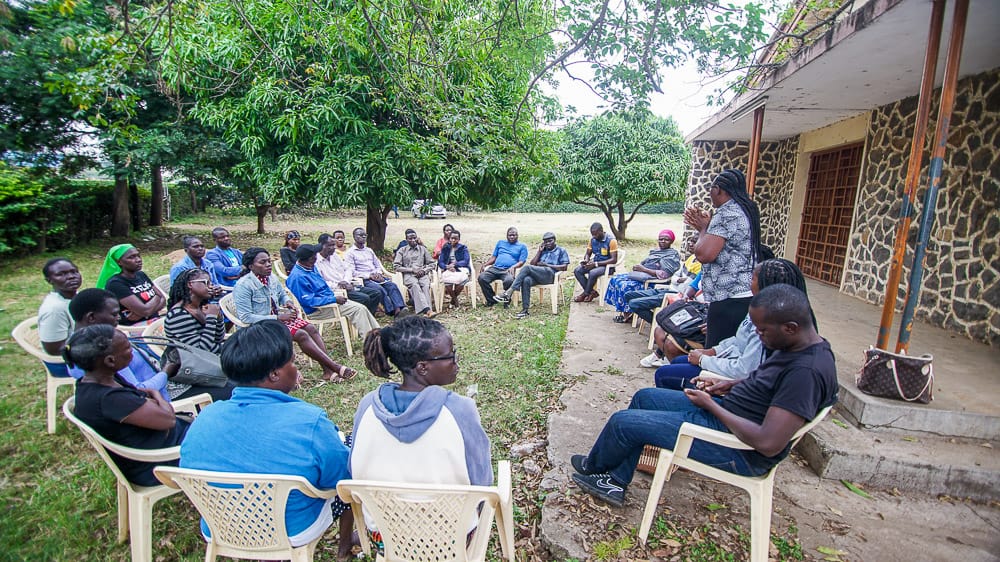
The planning process addressed six priority themes: health, livelihoods, agriculture and food security, water and waste management, land use and infrastructure, and culture and traditional knowledge. This thematic approach ensured that adaptation strategies responded directly to local vulnerabilities. Financing and resource mobilisation also emerged as a key focus, with strategies ranging from county budget allocations to donor support and public-private partnerships.
The resulting framework provides a roadmap for action, outlining timelines, responsibilities, and mechanisms for monitoring and knowledge-sharing. It also emphasises scaling successful initiatives across other vulnerable areas.
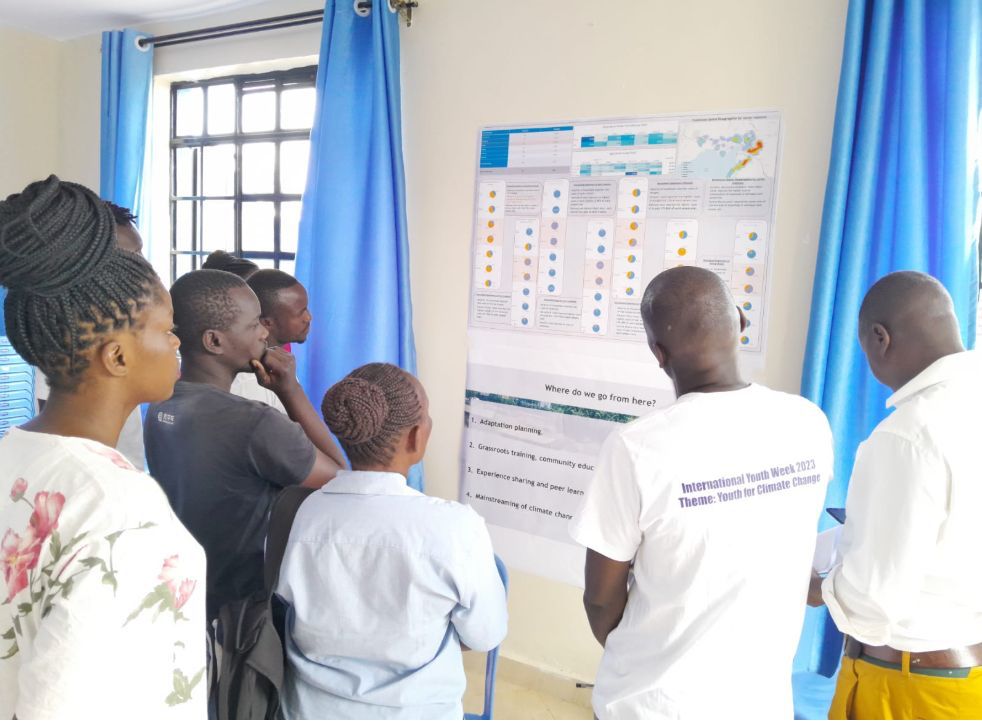
Kisumu’s adaptation planning is more than a technical exercise; it is a blueprint for action. By blending local knowledge with institutional support, the city is demonstrating that climate resilience can be built from the ground up. This journey shows that when communities lead, supported by research, partnerships, and responsive governance, a sustainable future is not only possible, it is already taking shape.


