


Indonesia
Strengthening Local Voices in Decision-Making Spaces
In Indonesia, climate change is accelerating at an alarming rate, with the impacts particularly pronounced in vulnerable coastal and rural areas. Papua and East Nusa Tenggara, which cover large parts of eastern Indonesia, are both strongly subject to the exploitative practices, while experiencing limited government attention both in the urban and rural environment.
Indigenous peoples and local communities of Indonesia have a close bond with place and nature. Over time, they have developed customary practices and regulations that help mitigate and adapt to climate change. Yet, their contributions are often overlooked, and they face significant barriers to receiving support.
In Indonesia, the VCA programme aims to create a stronger narrative at the national level and influence debates in policy discussions by highlighting how locally created solutions are feasible and valuable. With support from Hivos, SouthSouthNorth and WWF-Indonesia, the programme works alongside civil society and marginalised groups to ensure their voices are heard in climate dialogues and decision-making processes.
Our Impacts in Indonesia
36
Subcontracted Local Partner Organisations
20
Local Climate Solutions Supported
62
Initiatives Supported through the Next Level Grants Facility
26
Policies Influenced
The Indonesia Country Story
Indonesia is an archipelagic country in the Global South, consisting of over 17,000 islands and home to a population of approximately 290 million people across 38 provinces. The country faces a range of climate-related challenges. Rising sea levels and frequent flooding pose significant risks in urban centres like Jakarta. In other regions, such as Yogyakarta and Bandung, the impacts of climate change manifest as both flooding and prolonged droughts.
Indigenous communities living in and around forests are also facing immense challenges. Deforestation, land conversion, and land grabbing have displaced many Indigenous people, stripping them of their traditional livelihoods, food sources, and territories. These pressures make them particularly vulnerable to the effects of climate change.
Through VCA, we empower these communities by facilitating peer learning, strengthening networks, and building their capacity to address climate challenges. Our efforts also focus on mobilising additional resources at the local level and advocating for the rights of these communities.
Unified by Common Goals
As a result of the programme’s work in Indonesia, we have strengthened the capabilities of over 3,500 individuals, including 1,216 women, 100 women’s federations, 1,373 youth, and 80 Indigenous peoples. We have built solidarity among diverse marginalised groups across eight provinces and dozens of cities and districts. Nearly 400,000 euros have been mobilised in resources through joint advocacy efforts to support locally driven climate solutions.
Additionally, we have empowered change-makers and leaders who drive positive transformation in their communities. These collective efforts have led to the recognition of community rights in several key policies.
Striving for Change with our Local Partners
Working together, blending local and Indigenous insights with technical expertise, supporting each other, and developing long-term relationships allows VCA partners to achieve far more than they could achieve alone. An example of this is Indonesia’s Penta Helix collaboration model. This model has connected local partners, universities, and private actors, exemplified by the KEHATI Foundation and Panah Papua’s joint efforts to influence food security policies in Teluk Bintuni Regency.
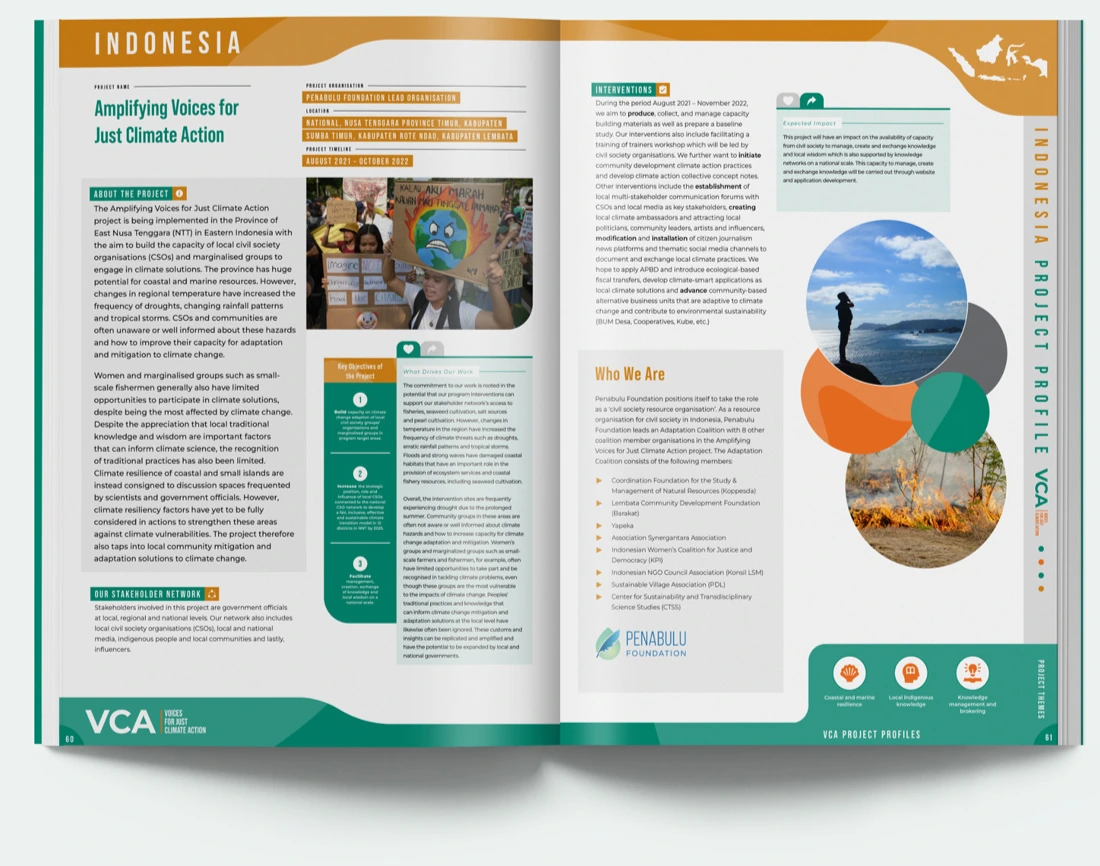
The Indonesia Project Profile publication highlights various innovative, locally-driven climate action initiatives implemented by our partners in Indonesia.


